
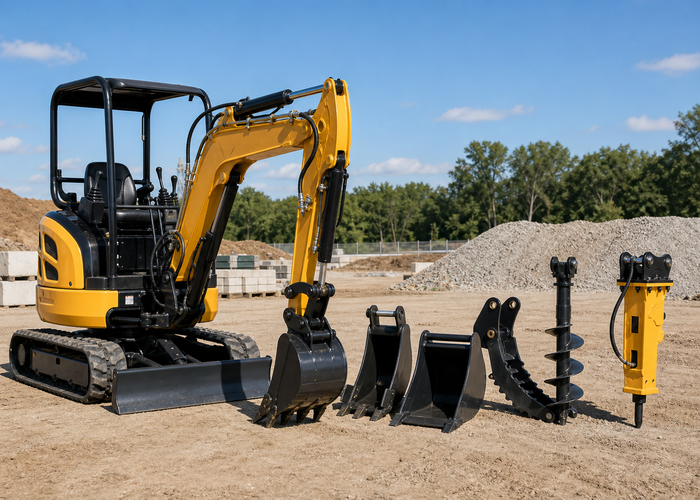
If you are buying a mini excavator, the machine is only half of the productivity story. The attachment package decides whether the machine becomes a trenching tool, a landscaping helper, a farm maintenance asset, or a small demolition platform. Before choosing attachments, review your work profile and compare it with our mini excavator equipment resources. For general attachment terminology, a neutral reference such as Wikipedia’s excavator attachment overview is also useful.
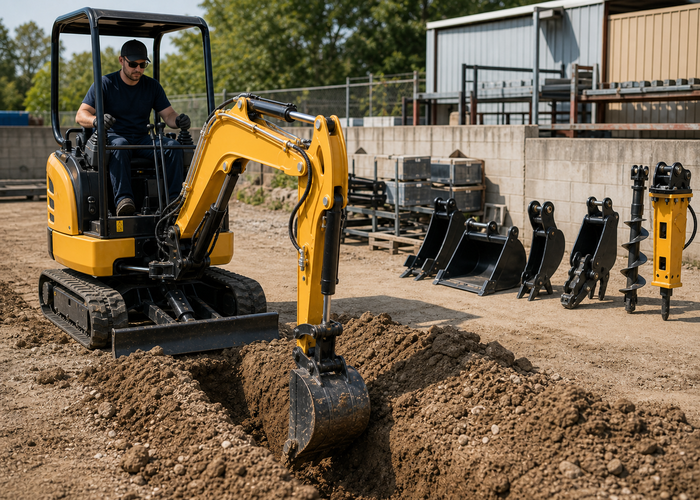
Start With Jobs, Not Accessories
A second-person buyer mistake is ordering every attachment that looks useful. That creates freight weight, storage problems, and unused inventory. A technical buyer starts with the job. If you trench utilities, you need a narrow trenching bucket and stable blade control. If you landscape, a grading bucket may deliver more value than a heavy demolition tool. If you clear brush, a rake or thumb can change the machine from a digger into a material handler.
Use this selection table:
| Job Type | Best First Attachment | What to Verify |
|---|---|---|
| Utility trenching | Narrow trenching bucket | Width, tooth profile, digging depth |
| Landscape grading | Grading bucket | Bucket width, cutting edge, blade control |
| Post holes | Auger | Hydraulic flow, bit diameter, soil type |
| Rock or concrete breaking | Hydraulic breaker | Flow, pressure, return line, carrier weight |
| Brush and debris handling | Hydraulic thumb | Pin size, cylinder routing, grip range |
| Root or compacted soil work | Ripper tooth | Pin fit, steel thickness, breakout force |
The Attachment Compatibility Checklist
Every attachment should be checked against four technical points: pin size, hydraulic flow, operating pressure, and machine weight. Do not assume that a small attachment is automatically safe for a small excavator. An oversized breaker can stress the boom. A mismatched auger can run slowly or overheat the hydraulic system. A wide grading bucket can feel smooth in loose soil but become clumsy in wet clay.
Ask your mini excavator manufacturer for auxiliary hydraulic flow, pressure, coupler dimensions, bucket pin diameter, stick width, and return-line requirements. If you will use attachments often, request a factory video showing the same machine operating with the same attachment type.
Buckets: The Highest-Use Attachment Family
Most owners should start with buckets. A general digging bucket handles everyday soil removal. A narrow trenching bucket creates cleaner trenches with less backfill. A grading bucket helps shape surfaces, clean ditch bottoms, and spread material. A rock bucket or heavy-duty bucket makes sense only when soil conditions justify the added weight.
For buyers building a dealer inventory, a strong starter package is one digging bucket, one trenching bucket, one grading bucket, and a hydraulic thumb. This combination covers many real jobs without making the machine complicated.
Hydraulic Thumb, Auger, and Breaker
A hydraulic thumb is often the most practical upgrade because it turns the mini excavator into a handling machine. You can grab small logs, stones, roots, concrete pieces, and jobsite debris. The key is clean hose routing and proper cylinder protection.
An auger is excellent for fencing, planting, and post-hole work. Before ordering one, ask whether your soil is sandy, clay-heavy, rocky, or frozen part of the year. Bit choice matters as much as the drive head.
A hydraulic breaker can be valuable, but it needs more caution. The OSHA excavation safety guidance reminds buyers that excavation work and nearby structures require planning. Breaking concrete near trenches, walls, or utilities should never be treated as a casual task.
Buyer Scorecard
| Question | Good Answer |
|---|---|
| Does the attachment match my top three jobs? | Yes, it supports repeated work, not rare tasks. |
| Does the machine have enough hydraulic flow? | Factory provides rated flow and pressure. |
| Can I service wear parts? | Teeth, pins, hoses, bits, and seals are available. |
| Can the supplier prove fitment? | Photos, drawings, and test video are provided. |
| Does the package ship safely? | Attachment weight and packing are documented. |
Final Technical Advice
The best mini excavator attachments are not the most impressive ones. They are the tools you will use every week, can maintain easily, and can verify before shipment. If you are planning an order, send your job list through our contact page and ask for an attachment package matched to your work, not a generic bundle.
FAQ
What is the first attachment most mini excavator buyers should consider? A trenching bucket, grading bucket, or hydraulic thumb is usually the best first choice, depending on your work.
Can any attachment fit any mini excavator? No. Pin size, coupler width, hydraulic flow, pressure, and carrier weight must match.
Is a hydraulic breaker worth adding? Yes, if breaking work is frequent and the machine has the correct hydraulic setup.
Should a dealer stock attachment packages? Yes. A machine-plus-attachment package can be easier for buyers to understand than a bare machine.